
Ethnic Village Stay · Reference Guide
Ethnic Village Stay is a two-to-three-day village stay built around real host families, shared meals, light walking, and quiet cultural time. The itinerary is below; this guide explains the immersion philosophy, homestay reality, daily rhythm, and how the product fits the northern cultural line-up.
Cultural immersion philosophy
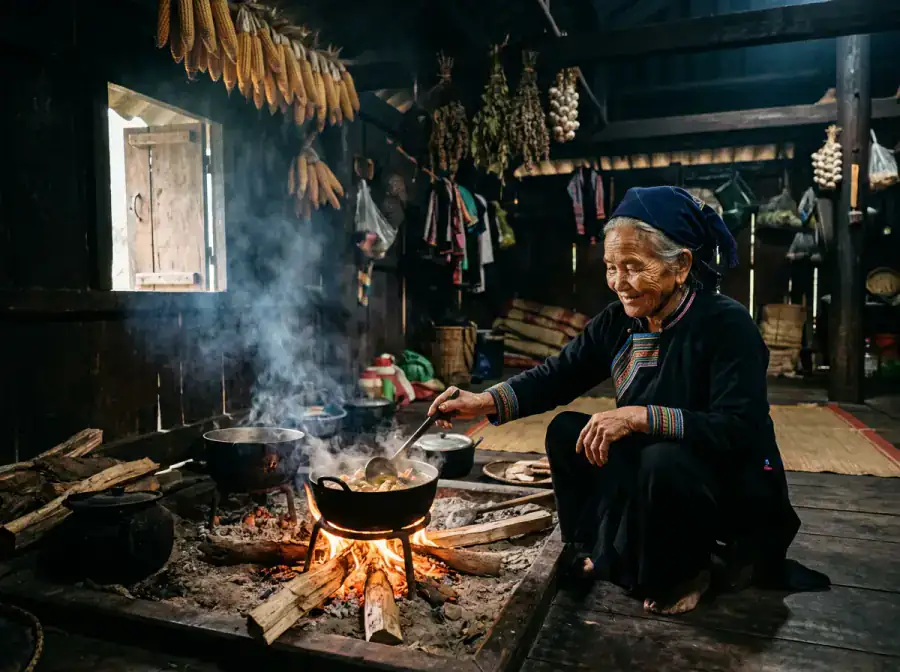
This is the shortest cultural immersion route in the collection: a grounded stay with a Tay, Hmong, Red Dao, or Giay host community depending on season, access, and family availability. The focus is not staged performance. It is daily life at human speed — cooking, field paths, market rhythm, family meals, and enough translation to understand what you are seeing without turning people into exhibits.
Responsible village visits
Village selection depends on host availability, road access, weather, guest mobility, local events, and whether the family can receive guests respectfully that week. The guide designs stays around consent and rhythm: the right host family, the right pace, and clear boundaries so guests are welcomed without turning daily life into a show. No guaranteed village access, family interaction, or exclusive cultural experience is promised on every departure.
Homestay expectations
Expect simple sleeping arrangements with homestay bedding and basic washing access — family kitchens, stilt houses or hillside lanes, and evenings built around shared meals rather than hotel amenities. What the host family can offer that season is confirmed in the briefing; private room upgrades may be unavailable.
Walking and daily rhythm
Light walking only — typically 2–4 hours per day on village footpaths, rice fields, and homestay lanes, with optional longer walks when the group wants more movement. Day 2 wakes with the village rather than an alarm-clock tour schedule. Two-day versions return after breakfast and a short farewell walk; three-day versions may add market, viewpoint, or herbal-bath time depending on the village and season.
Weather and seasonal flexibility
The published planning window is year-round with best conditions October–April for clearer walking and cooler nights. Host community, trip length, and daily activities adjust for season, access, family availability, and weather. The guide may substitute activities when rain, road access, or host commitments require it.
Respectful cultural etiquette
Day 1 covers village etiquette, gift customs, photography boundaries, and fair payment context. The final transfer includes a debrief on etiquette, fair payment, and how to share photos respectfully after the trip. Village context: Sapa field guide. Photography boundaries in village settings: Ha Giang for Photographers.
Who this expedition suits
Beginner-friendly travelers who want a short host-family stay — respectful, quiet, curious, and flexible. No technical skill is required, but guests should manage stairs, fields, and uneven ground comfortably. Recommended 2–6 travelers so host families are not overwhelmed and translation stays personal.
How it compares with other northern routes
The Sapa Hidden Trek Expedition is a five-day guided walk through Muong Hoa valleys and highland hamlets with porter-supported luggage and intermediate fitness demand — a trekking product, not a compact host-family immersion. The Tribal Portrait Experience is a three-day portrait-focused cultural route built around consent and photographer pacing. The Rice Season Tour is a four-day photography and culture route timed around northern rice terraces and harvest rhythm. This page is the short grounded village stay among those formats.
What to bring
Bring Modest layered clothing, Slip-on shoes or sandals, Light rain shell, Small overnight bag, Personal medication, Reusable water bottle, Notebook, and Optional small gift for host family. The product provides Cultural translator-guide, Host-family coordination, Homestay bedding, Meals with the family, Village etiquette briefing, Transfer support when quoted, and Route-reference PDF. Travel insurance is not included. For preparation context, read the expedition gear checklist.